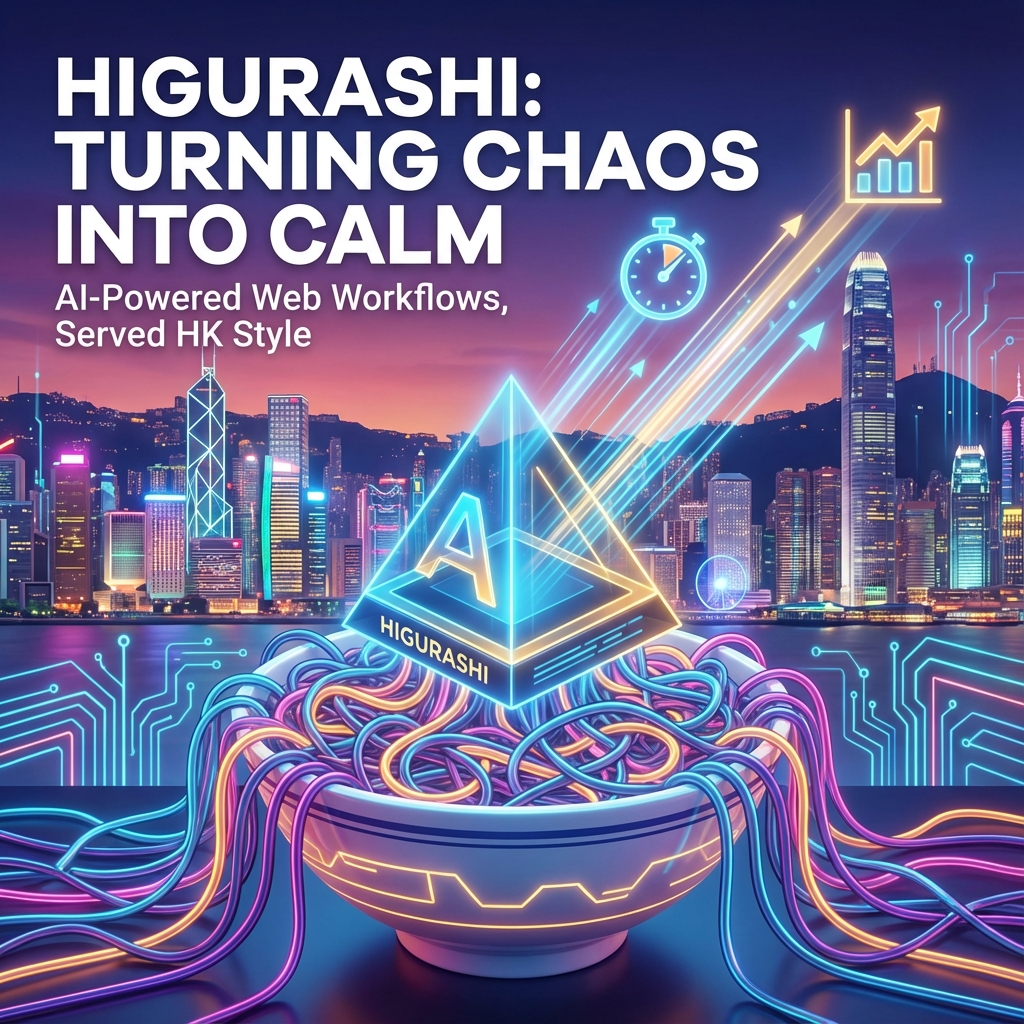
Welcome to a short, energised read about how Higurashi blends AI into everyday web workflows — served Hong Kong style. 🚀 Whether you’re a solo founder grabbing a quick lunch or running a small tech team, this is a crisp case study of turning chaos into calm with smart integration, low friction, and measurable time savings.
Why the lunch rush is actually an operations problem (not a food problem)
Anyone who’s run a small business knows the same peaks keep repeating: orders pile up, confirmations get missed, and people wait. The theme we borrowed from local food stories is familiar — limited-time offers, queues, and the delight of a well-executed bite. But instead of describing a noodle bowl, we look at the queue: the process behind it.
Higurashi approaches that queue as a throughput challenge. By integrating lightweight AI into routine website and backend flows, the goal is simple: make repetitive work invisible so teams focus on value. 🌟
What we built — a different kind of “lunch special”
Picture this: a weekday pop-up where spots are limited and demand spikes. Instead of manual booking, human confirmation emails, and last‑minute invoice juggling, Higurashi layers three compact AI microservices into the site:
- Smart Intent Parser — transforms natural language bookings and chat messages into structured actions (reserve slot, add dietary note, request invoice).
- Demand Predictor — forecasts peak minutes and suggests batch preparation to reduce waiting and waste.
- Auto-Flow Orchestrator — triggers the right downstream actions: confirmation messages, kitchen prep signals, and payment routing.
The result? From a user clicking “reserve” to a confirmed, paid slot: under 60 seconds. ⚡️
Tech without the tech-scare: how integration feels simple
We intentionally avoid heavy rollouts. Higurashi’s modules are built to be embedded into existing websites without ripping and replacing. Key design principles:
- Small, focused APIs: each service does one thing well — parse, predict, or orchestrate.
- Event-first architecture: actions are triggered by events (a click, a message, a payment), not by polling.
- Human-in-the-loop: AI suggests, humans approve when needed. This keeps trust high and error rates low.
For founders, that means minimal engineering time to add a meaningful automation layer. For customers, it feels like magic — faster confirmations, fewer surprises. ✨
The customer story (without inventing people)
Instead of profiling individuals, imagine a typical scenario: a coworking café that wants to sell a limited 20-seat “Founder Lunch” slot every weekday. Before, the owner juggled messages, phone calls, spreadsheets, and last-minute cancellations. After integrating Higurashi:
- Visitors book in natural language via website chat or a short form.
- AI extracts intent and dietary notes, confirms availability instantly.
- The kitchen gets an optimised prep plan based on predicted demand windows.
- Automated reminders reduce no-shows and streamline payments.
More than convenience, the business lowers waste, smooths staff workload, and improves customer satisfaction — all without adding headcount. 💡
What this means for Hong Kong entrepreneurs
Hong Kong founders live on efficiency. Time saved on routine tasks scales directly into more product thinking, partnerships, and market moves. Higurashi’s integrations aim to be multipliers:
- Save time: shave minutes off each transaction and hours off weekly admin.
- Reduce errors: structured data replaces manual copy-paste.
- Scale without hiring: automate repeatable decisions so small teams stay nimble.
These are practical wins — not flashy claims — that match a founder’s bottom line and daily reality. 📈
Behind the scenes: design decisions that matter
We emphasise a few principles borrowed from product and operations thinking:
- Predictability over perfection: it’s better to give consistent, slightly conservative predictions than to chase perfect accuracy that confuses operators.
- Transparent automation: always show what the AI did and why — that keeps trust and gives operators quick control.
- Modular rollout: enable one automation at a time (e.g., start with confirmations, then add demand prediction).
These choices make adoption practical for small teams and startups across Hong Kong’s fast-moving scene. 🇭🇰
Quick checklist — is this right for your business?
If you run a site or service with recurring micro-interactions (bookings, orders, appointments), this lightweight approach fits well. Ask yourself:
- Do you spend more than 5 hours/week on confirmations and manual follow-ups?
- Do you experience regular short-term demand spikes that cause queueing or food waste?
- Are you comfortable adding small APIs to your site or CMS?
If you answered “yes” to two or more, a targeted AI integration could be a high ROI move. 🔍
Life is simple, just coding.
Closing thoughts — small automations, big relief
We drew inspiration from local, limited-run food posts: the excitement of an exclusive drop, the craftsmanship behind a great bite, and the joy when everything arrives on time. Higurashi translates that same delight into web operations: less waiting, fewer surprises, and more room to build. 🎉
For Hong Kong entrepreneurs who want to move fast without burning out, this is a gentle reminder: sometimes the smartest feature is the one that makes ordinary tasks disappear. #Higurashi #AI #HKTech #Automation #LifeIsSimple